
🦍 Honoring a Legend 🦍
A tribute to Harambe the gorilla and a celebration of western lowland gorillas — the most magnificent great apes on Earth.

🌿 Gorilla Kingdom
Everything you never knew about Earth's largest primates — and why they matter.
Gorillas share 98.3% of their DNA with humans, making them our second-closest living relatives after chimpanzees. The four gorilla subspecies — western lowland, Cross River, eastern lowland, and mountain — are all endangered or critically endangered.
Adult male gorillas (silverbacks) can lift over 1,800 lbs — roughly 10 times the strength of a human. Despite this, gorillas are predominantly gentle and non-aggressive, preferring bluffs and chest-beating to actual combat.
Gorillas are almost entirely herbivorous, consuming up to 40 lbs of vegetation per day — including leaves, stems, fruit, and bark. They occasionally supplement with insects like termites and ants to get extra protein.
Gorillas can learn hundreds of signs in American Sign Language. Koko the gorilla famously mastered over 1,000 signs and understood ~2,000 spoken words, demonstrating remarkable cognitive depth and emotional intelligence.
Gorillas live in family groups called troops, typically led by a dominant silverback. Troops average 5–10 members but can exceed 30. The silverback makes decisions on movement, foraging, and defense of the group.
Gorillas build new sleeping nests every night from branches and leaves, either on the ground or in trees. They spend roughly 12 hours a day resting, and researchers use nest counts to estimate gorilla population sizes.
Gorillas practice zoopharmacognosy — the ability to select and consume specific plants for medicinal purposes. They've been observed eating plants with antibacterial and antiparasitic properties that they otherwise avoid in normal foraging.
Like humans, every gorilla has a completely unique set of fingerprints and noseprints. Researchers use noseprint identification (nostrils, ridges, and wrinkles of the nose) as a reliable method to individually identify wild gorillas.
Gorillas are a keystone species. By spreading seeds through their dung across vast forest territories, they help maintain the biodiversity of Central African rainforests. Their decline would have cascading effects on forest regeneration.
🦍 In Memoriam
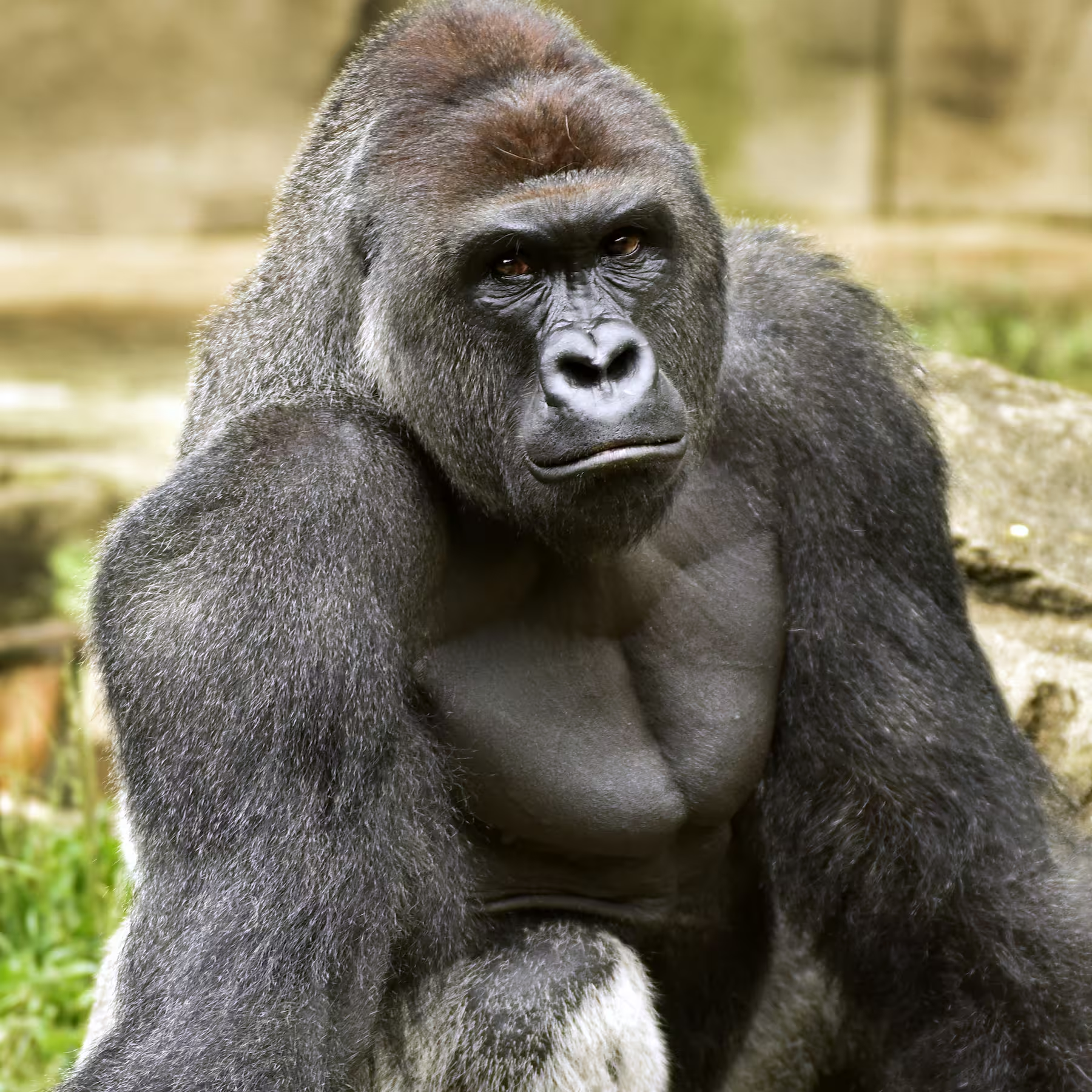
Harambe was a western lowland gorilla born on May 27, 1999, at the Gladys Porter Zoo in Brownsville, Texas. He was transferred to the Cincinnati Zoo and Botanical Garden in 2014, where he lived until his tragic death on May 28, 2016.
When a three-year-old boy fell into the gorilla enclosure, zoo officials made the heartbreaking decision to shoot Harambe to protect the child. The event ignited a global conversation about wildlife conservation, captive animal welfare, and our relationship with the natural world.
Harambe was not just a gorilla — he became a symbol. His passing prompted millions to learn about the plight of western lowland gorillas, listed as Critically Endangered by the IUCN, with fewer than 100,000 individuals remaining in the wild.
🔬 Deep Knowledge
Gorillas demonstrate abstract thinking, use rudimentary tools (sticks to test water depth, branches as ladders), exhibit empathy, and have been shown to understand cause-and-effect relationships. Their problem-solving ability rivals that of young children.
Gorilla infants nurse for up to 3 years and stay close to their mothers for 4–5 years. This extended childhood allows them to learn complex social behaviors, foraging techniques, and tool use — a hallmark of highly intelligent species.
Gorillas display clear emotional responses including joy, sadness, and grief. They have been documented mourning deceased group members, staying with bodies for extended periods. They form deep, lasting bonds that can persist for decades.
Gorillas beat their chests with cupped hands — producing a sound audible nearly a mile away — to communicate information about their size, health, and location. Contrary to popular belief, it is usually a bluff or social signal, not a sign of aggression.
Mountain gorillas (Gorilla beringei beringei) live at altitudes up to 14,700 ft and have developed thicker fur to survive cold temperatures. Climate change is altering their bamboo-rich habitats, threatening food availability year-round.
Mountain gorillas are the only great ape whose population is actually increasing — rising from ~620 in 2008 to over 1,000 today — thanks to sustained anti-poaching efforts, veterinary care, and eco-tourism revenue in Uganda, Rwanda, and DRC.
The least I can do is speak out for those who cannot speak for themselves.— Jane Goodall, Primatologist & Conservationist
🌐 Who We Are
AlfaHarambe is an independent fan site dedicated to the memory of Harambe and the broader conservation of western lowland gorillas. We believe that education, empathy, and awareness are the most powerful tools for wildlife protection.
This site was built with love, code, and a deep respect for one of nature's most magnificent animals. We strive to separate fact from internet folklore and present accurate, thoughtful information about gorilla biology, behavior, and conservation.
Harambe's story transcended the internet. While the memes brought laughs, the underlying conversation raised genuine questions about zoo welfare, endangered species breeding programs, and what we owe to the animals we keep in captivity. His legacy continues to fuel donations to organizations like the Dian Fossey Gorilla Fund and the African Wildlife Foundation.
AlfaHarambe is a fully static website with no backend, no trackers, and no ads. It is built with plain HTML, CSS, and JavaScript — no frameworks, no dependencies.
Dedicated to the memory of Harambe (1999–2016), whose story brought global attention to gorilla conservation and captive animal welfare.
All facts are drawn from peer-reviewed zoological research, the IUCN Red List, and reputable conservation organizations like WWF and Dian Fossey Fund.
We highlight the critical status of all gorilla subspecies and encourage support for organizations fighting habitat loss, poaching, and the bush meat trade.
No trackers. No cookies. No ads. Your visit is completely private. We collect no personal data — ever. Read our Privacy Policy for details.
Built with semantic HTML5, accessible contrast ratios, and zero JavaScript dependencies for a fast, accessible experience on any device.
Toggle between a rich dark forest theme and a warm light theme. Your preference is saved locally in your browser.
📬 Reach Out
Have a question, a gorilla fact to share, or want to talk conservation? We'd love to hear from you.